The Young Mathematicians’ Symposium is an annual event that celebrates the vibrant research culture within our department. It serves as a platform for our PhD scholars and postdoctoral fellows to showcase their work, engage with peers, and spark new ideas through collaboration.
This was a 3 day event scheduled from May 11 to May 13, 2026. Like every year, the symposium will feature a series of plenary research talks by distinguished invited speakers. Alongside these, we proudly present contributed talks by our own students and postdoctoral fellows, highlighting the diverse and cutting-edge work happening within our community.

I am not in this photo.
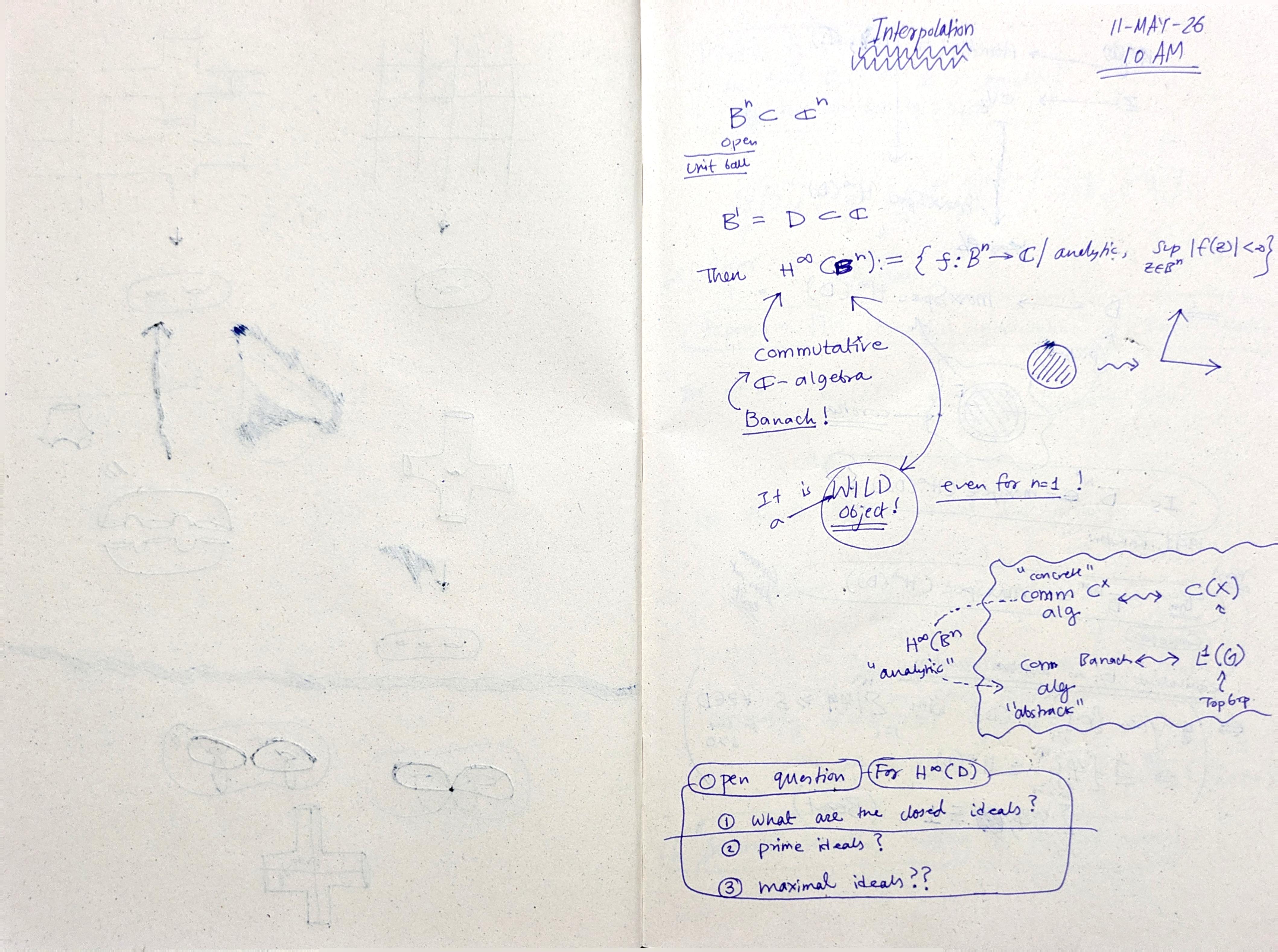
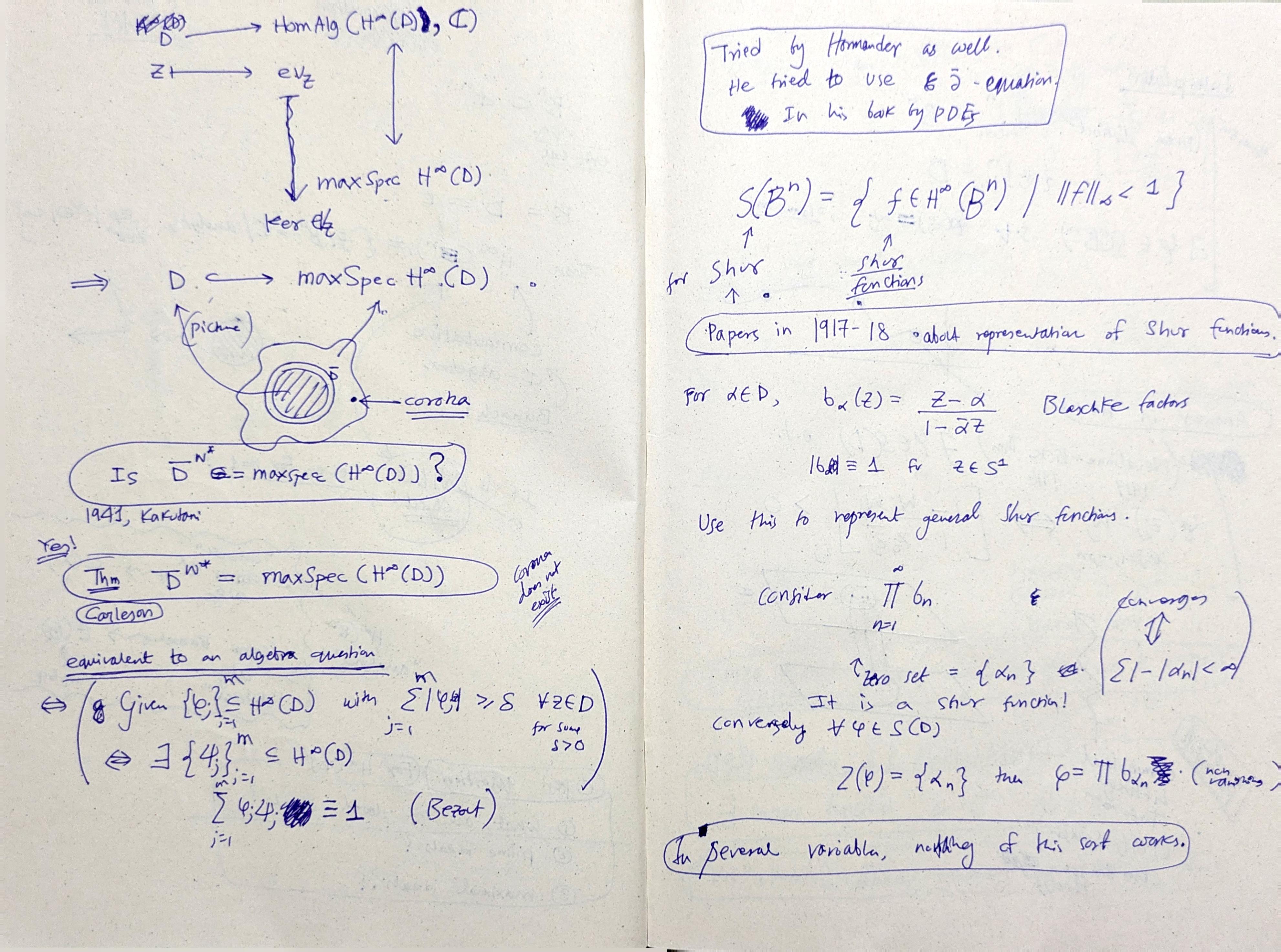
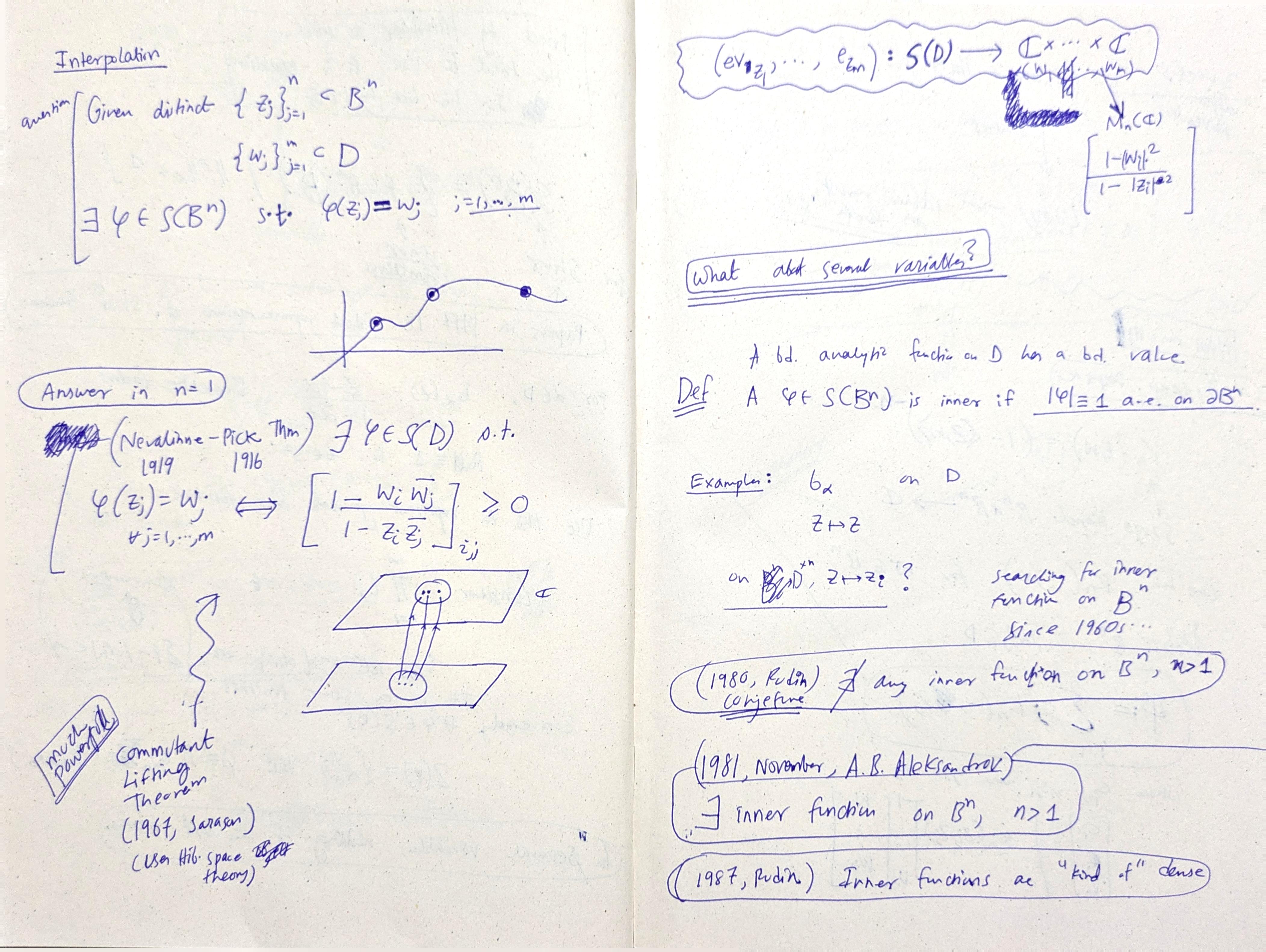
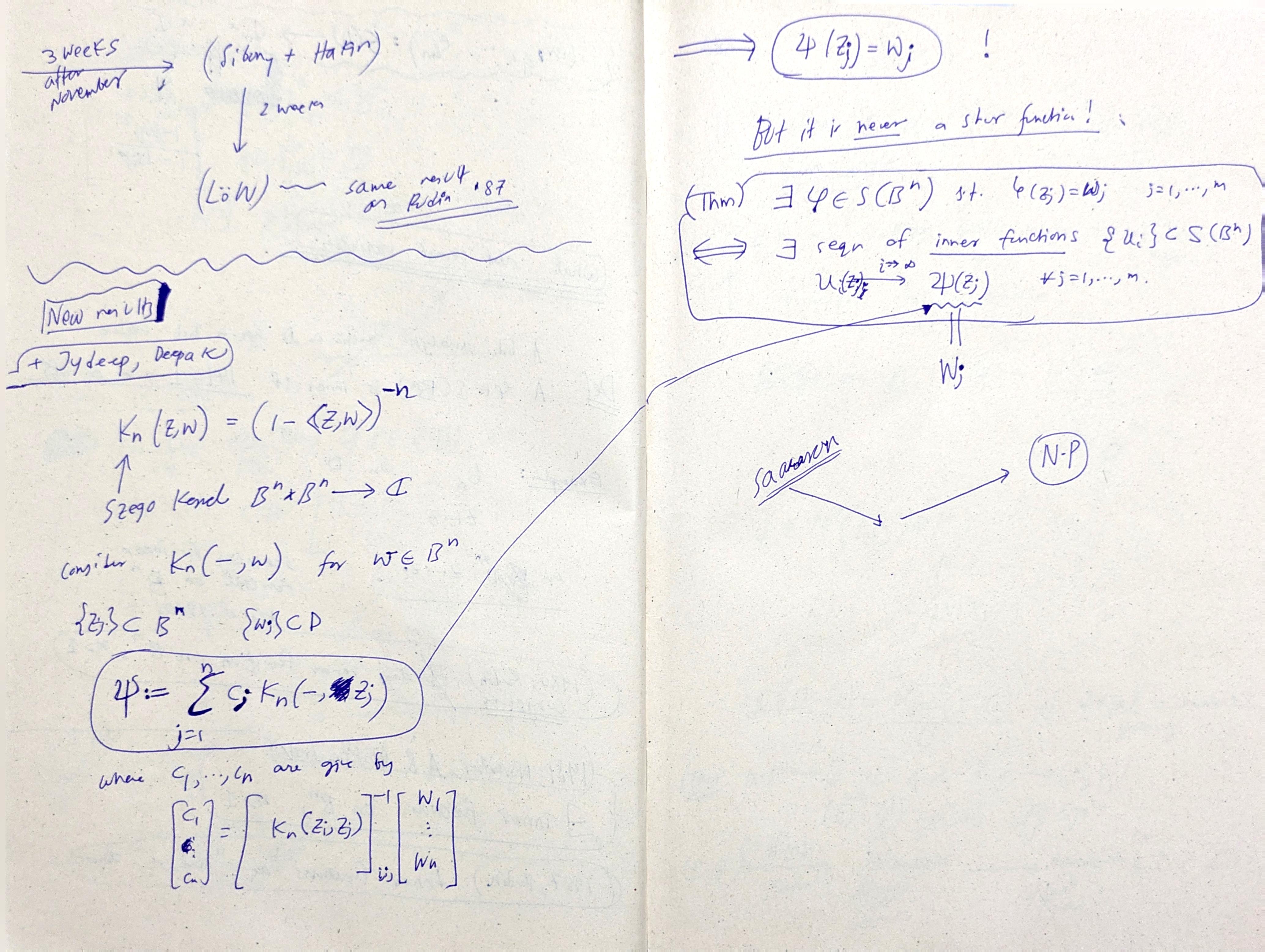
Jaydeb Sarkar, ISI Bangalore - Interpolation on the unit ball
Abstract
Analytic interpolation is a classical problem that started more than a century ago. This further links several subjects, including complex analysis, linear algebra, Hilbert function space theory, and even electrical engineering. This talk will review the history of these problems and their development in both one and several variables. Time permitting, recent progress on interpolation in the unit ball of
will also be discussed.
[2512.11349] Approximation, interpolation, and lifting on the unit ball
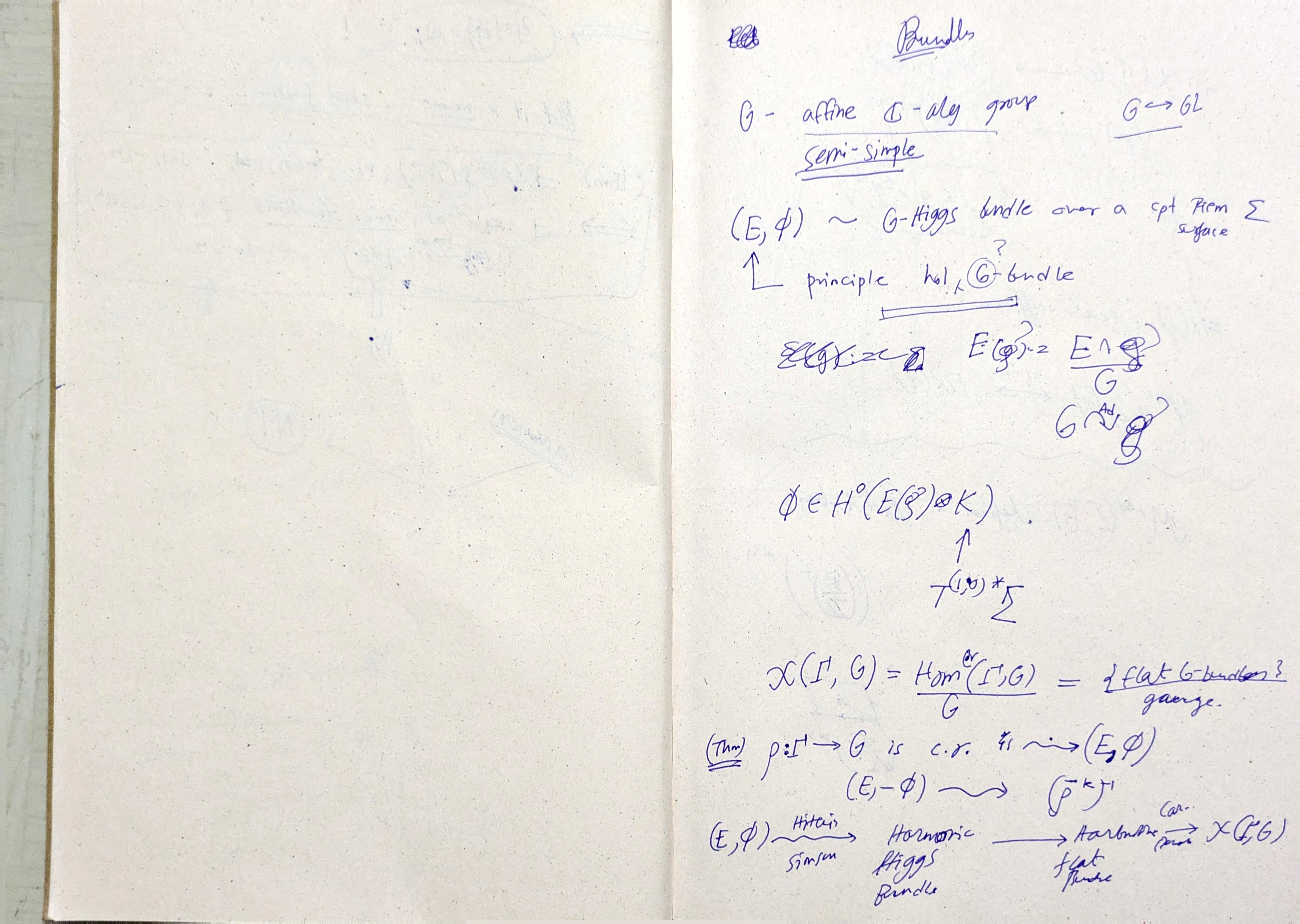
Tathagata Nayak - Reversibility in Higgs Bundles
Abstract
A
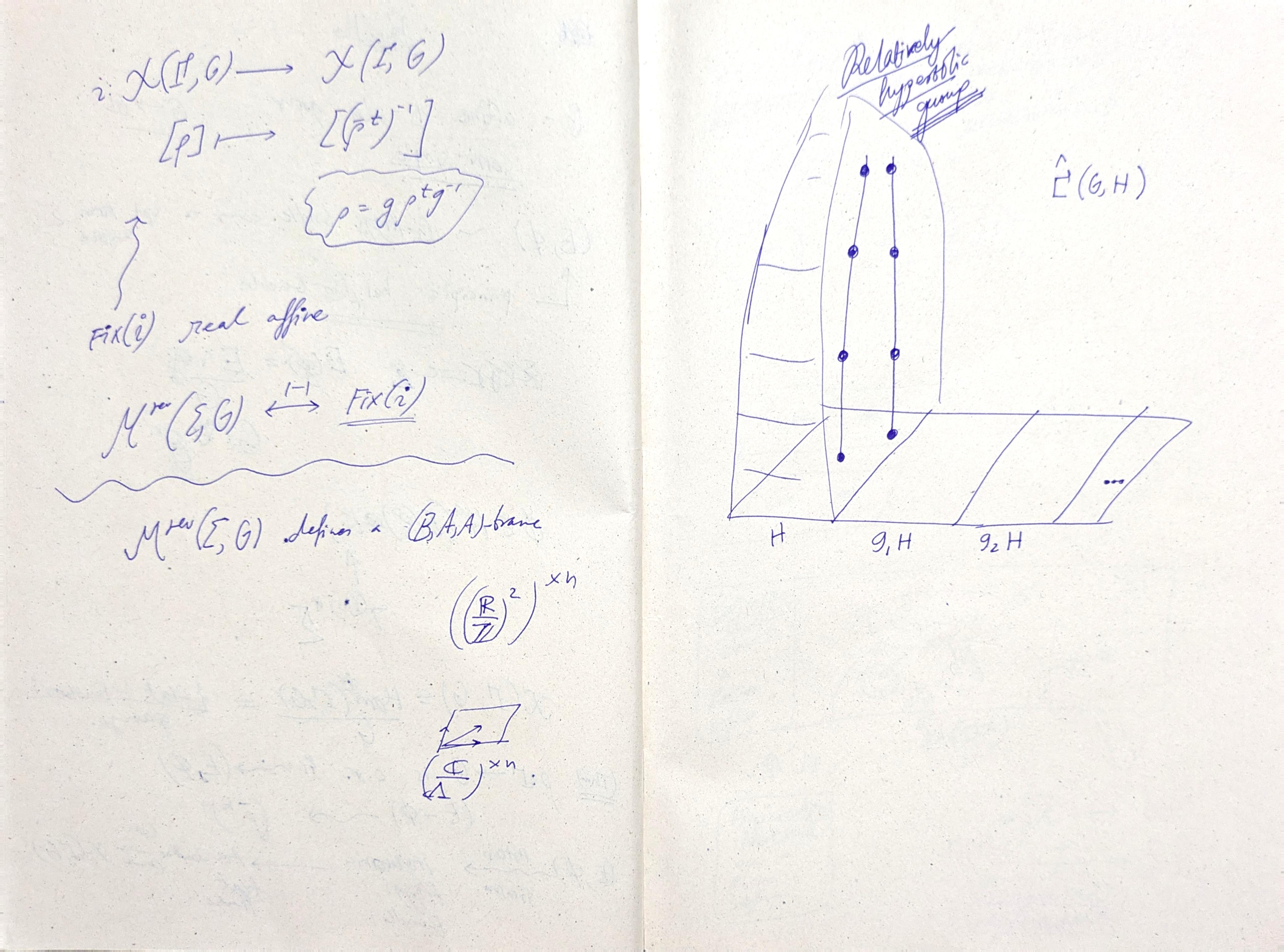
-Higgs bundle is said to be reversible if . In this talk, we show that the moduli space of degree 0 polystable reversible -Higgs bundles over a compact Riemann surface admits the structure of a real affine variety. We further prove that its stable locus defines a canonical -brane in the sense of Kapustin-Witten. Finally, we analyze some properties of its Hitchin fiber using spectral curves. This is joint work with Prof. Krishnendu Gongopadhyay.
Rana Sardar - A characterization of relative hyperbolicity
Abstract
Relative hyperbolicity has been characterized in numerous ways over the past two decades. In this talk, a boundary-theoretic characterization of relatively hyperbolic groups will be presented. Let G be a finitely generated group with a finite collection H of finitely generated subgroups, and let
denote the associated cusped space. Then the pair is non-elementary relatively hyperbolic if and only if the Morse boundary or the contracting boundary is non-empty and compact. I will begin with a brief overview of hyperbolic and relatively hyperbolic groups, their associated cusped spaces, and notions of boundaries. I will then review earlier characterizations and proceed to introduce Morse and contracting boundaries, discuss their key properties, and present the boundary-theoretic characterizations of (relatively) hyperbolic groups.
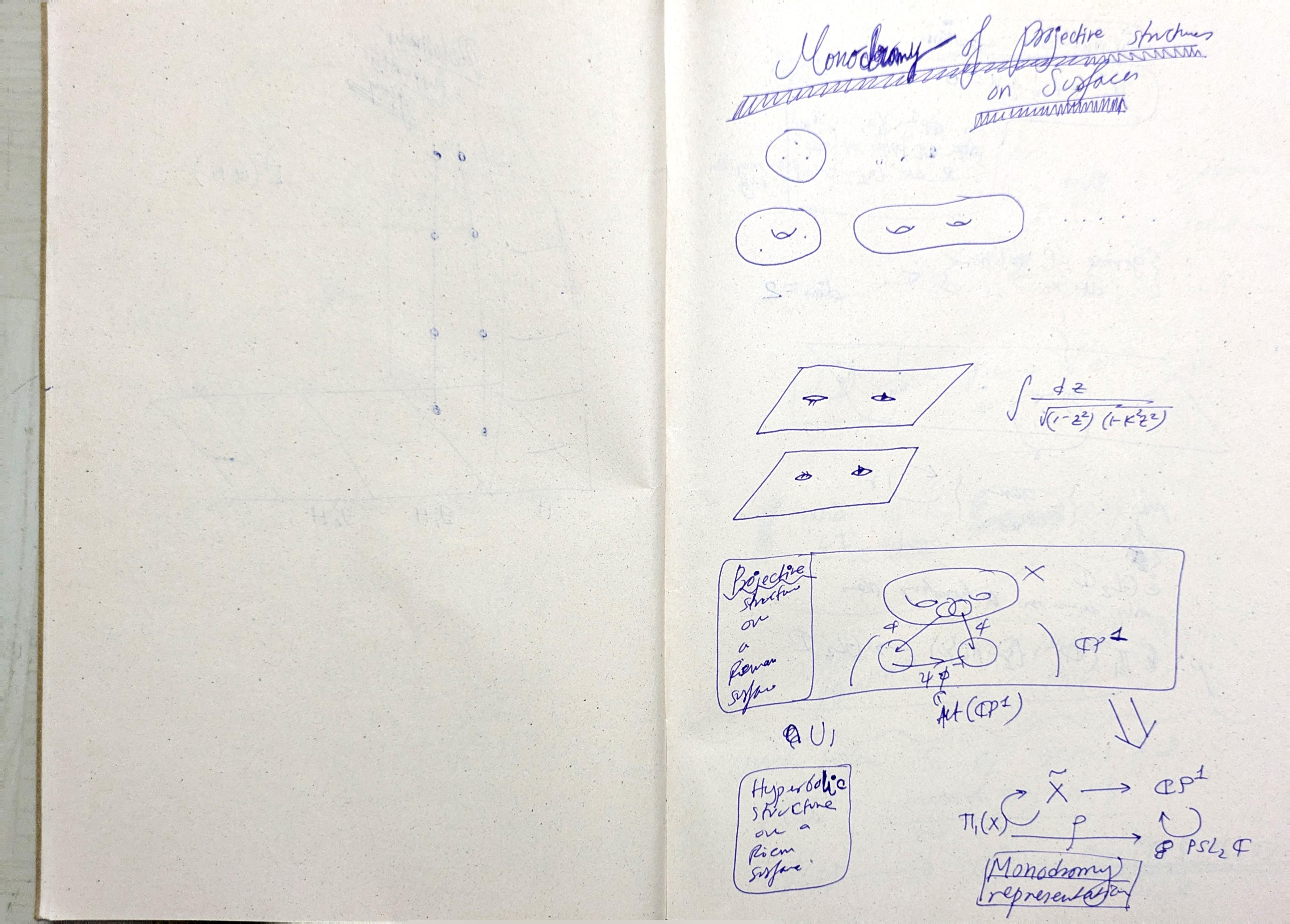
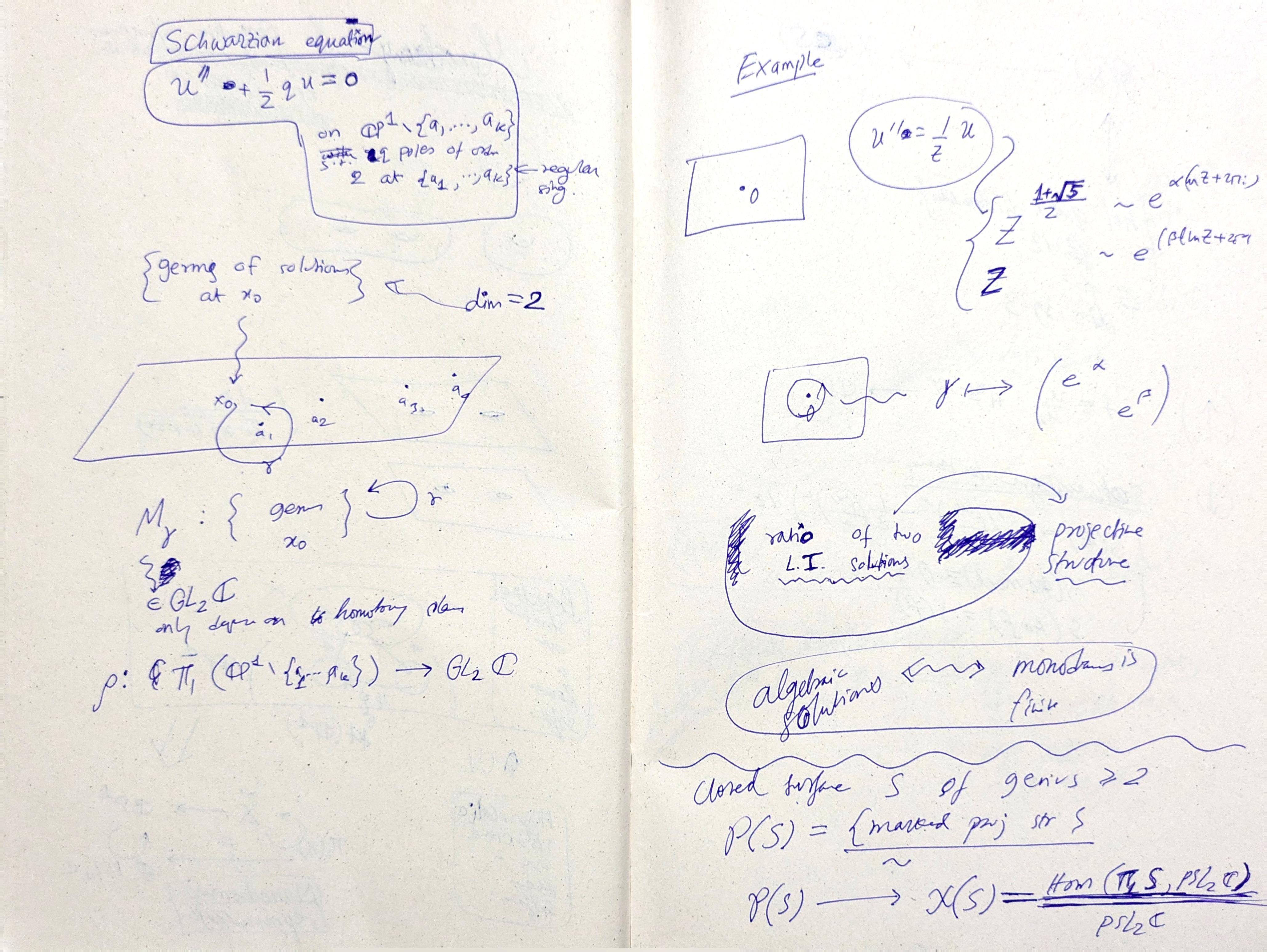
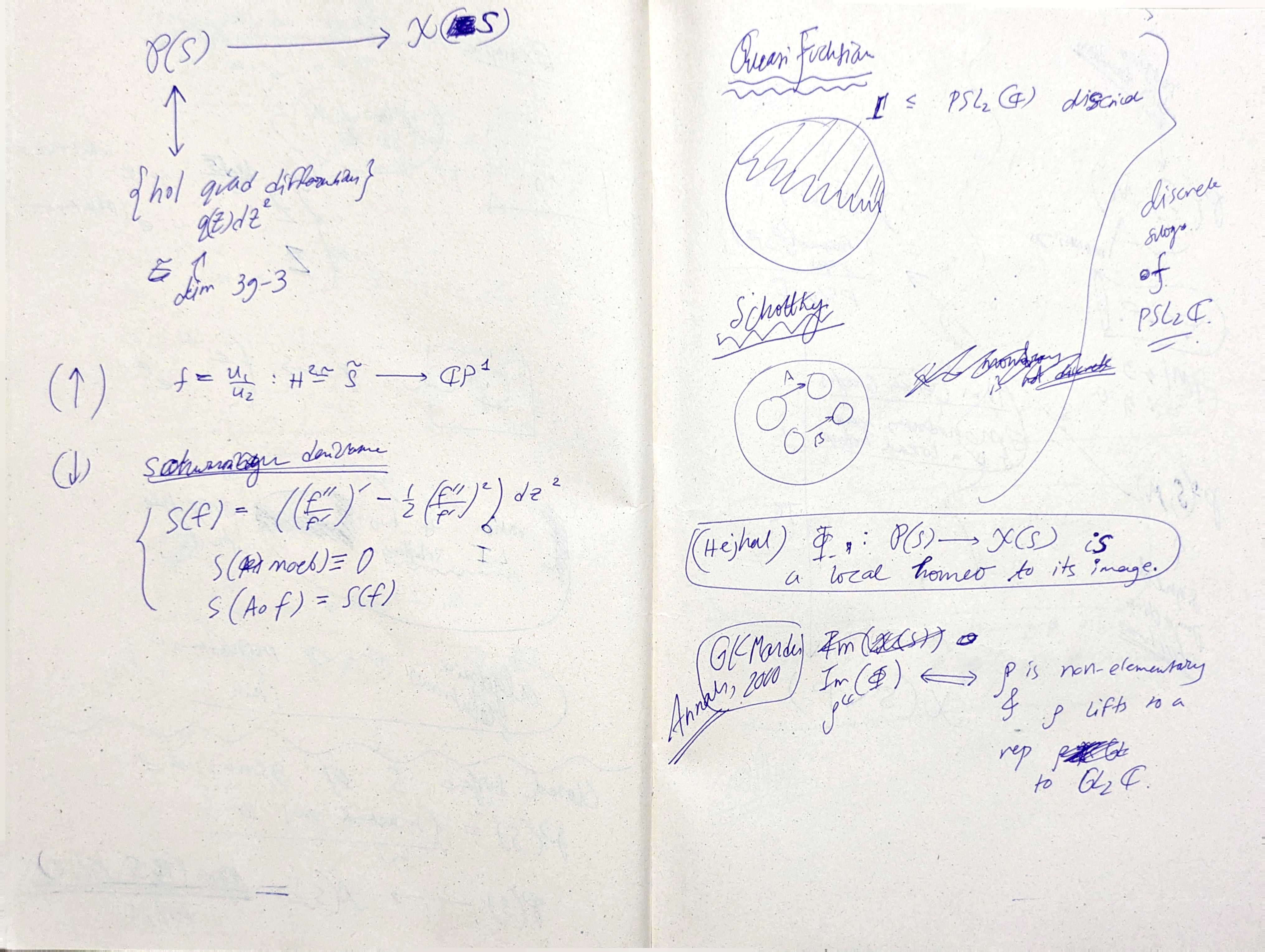
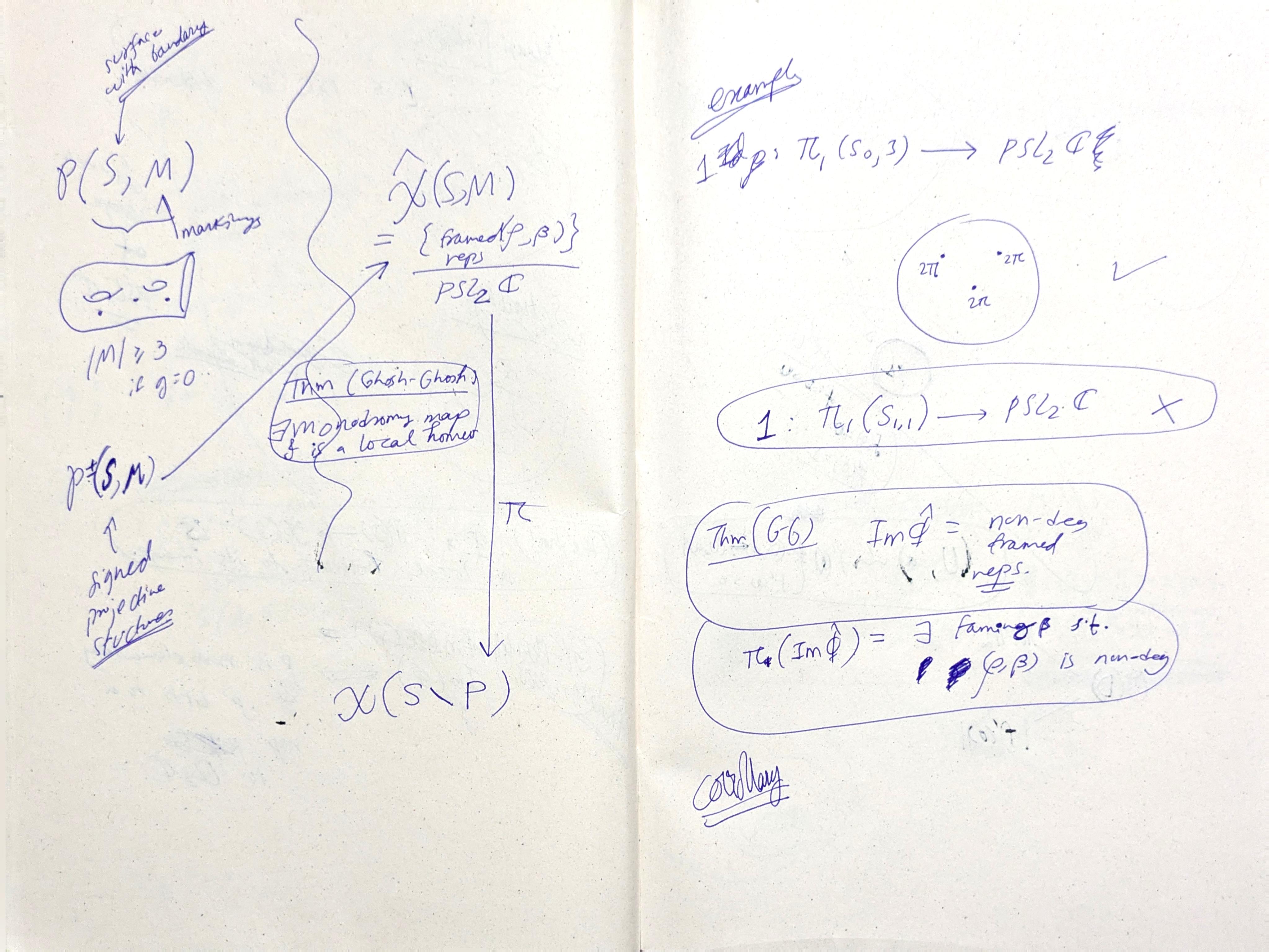
Subhojoy Gupta, IISc - Monodromy of projective structures on surfaces
Abstract
A complex projective structure on a surface
is a geometric structure modelled on the Riemann sphere. The monodromy of the structure determines a representation from the fundamental group of to , which is the group of conformal automorphisms of the Riemann sphere. The question of what monodromy representations arise, has had a long history, arising from the theory of linear differential equations on the complex plane, and has connections with topology, complex analysis and hyperbolic geometry. In this talk I will describe some of these connections, and survey known results, including some recent work of mine with various collaborators, about the case when S is a punctured surface.